House Painting Sheen: The Choice Nobody Explains and Everybody Regrets
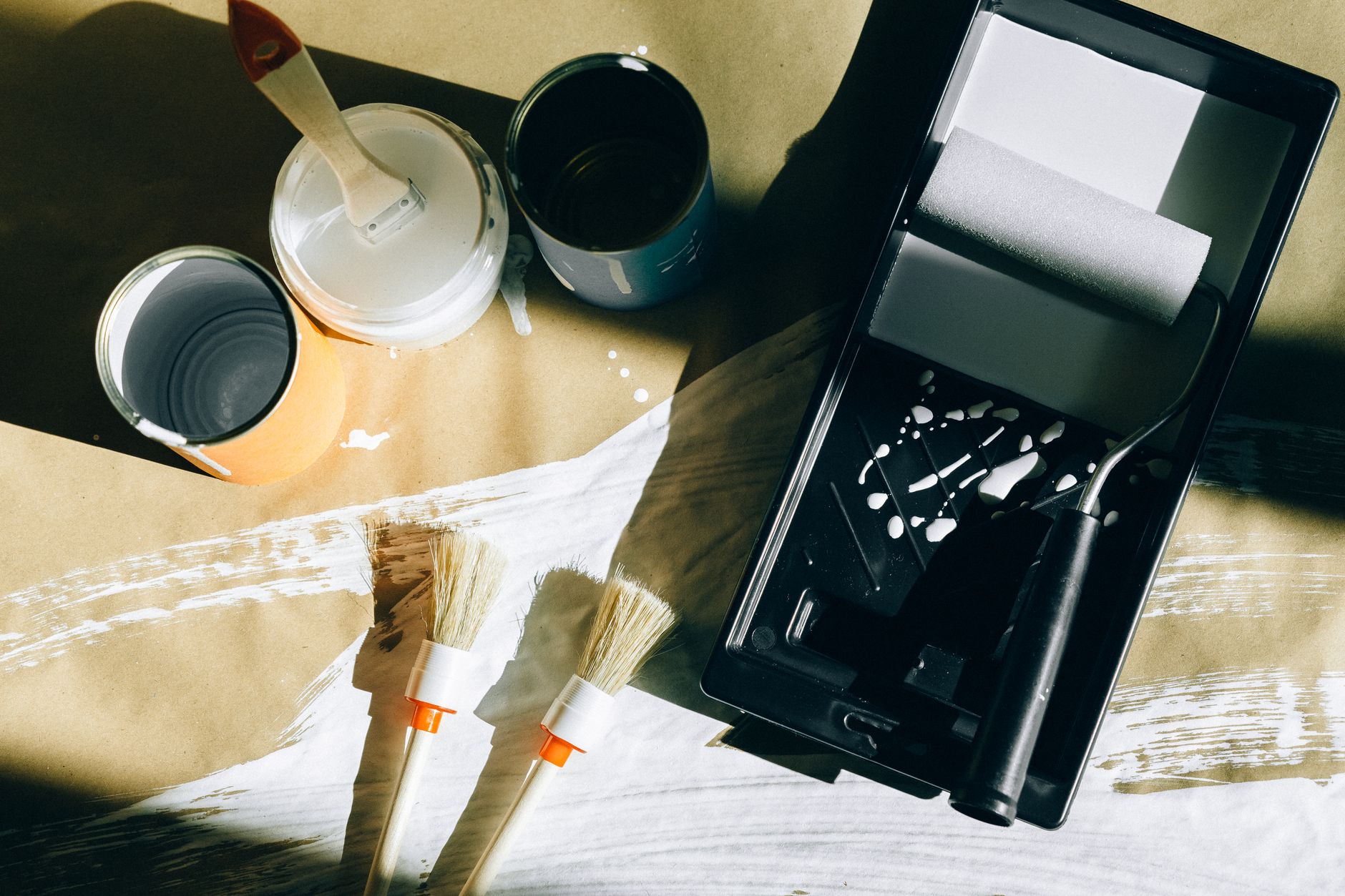
Colour gets weeks of deliberation. Sheen gets decided at the counter in about nine seconds, usually by whoever is holding the tin. Then it is on four walls for the next decade.
Sheen is not a finishing touch. It changes how washable a surface is, how much of the wall’s condition you can see, how well it survives being touched, and how the colour reads at different times of day. Getting it wrong is a more expensive mistake than picking a colour you go off, because a colour you dislike is still a functioning surface.
What sheen actually is
Every paint is pigment and binder. Sheen is the ratio between them.
More binder relative to pigment gives a harder, tighter, glossier film. That film reflects light directly, resists moisture, and can be wiped without the surface giving anything up. Less binder gives a more open, porous film that scatters light instead of bouncing it, which is why flat paint looks soft and hides so much.
Everything else follows from that one trade. Durability and washability rise with gloss. Forgiveness falls with it. There is no sheen that is good at both, and any advice that says otherwise is selling something.
The range, plainly
Flat and matte
Almost no reflection. It scatters light so effectively that it genuinely hides roller marks, patched repairs, minor waviness and uneven texture. On a ceiling or an older wall it is the difference between a surface that looks calm and one that looks like a relief map.
The cost is fragility. A traditional flat film is porous, so it holds onto dirt and cannot be scrubbed without burnishing, which leaves a shiny patch that is worse than the mark. Modern washable mattes have narrowed this gap considerably and are worth asking about, but they still do not behave like an eggshell.
Best on ceilings, adult bedrooms, formal rooms, and any wall whose surface has seen better days.
Eggshell
A low sheen with a slight softness in the light. This is the default for most living space for a good reason: it takes a wipe, it holds up to normal life, and it still hides a reasonable amount.
It is the sensible answer when you do not have a specific reason to choose otherwise, which is most of the time.
Satin
Noticeably reflective without being glossy. More durable again, genuinely washable, and the point at which sheen starts revealing rather than hiding: every roller lap, every patch, every ripple in the wall comes forward.
Good in kitchens, bathrooms, hallways and children’s rooms. Only worth using on walls that are actually flat, because it will report on any that are not.
Semi gloss and gloss
Hard, tight and highly washable. This is trim, doors, cabinets and joinery territory, and it is where the extra durability earns its place, because those are the surfaces that get handled.
On a wall it is unforgiving to the point of cruelty. Every imperfection in the substrate is not merely visible but emphasised.
The rule that decides most of it
Sheen up where hands and water go. Sheen down where the surface is imperfect.
That single sentence resolves the majority of real decisions. A hallway takes shoulders and bags, so it wants durability. A bedroom ceiling takes nothing at all and wants to disappear. A bathroom wants to shed moisture. An old plaster wall in a front room wants to be flattered.
Where the two pull against each other, and they do, the surface condition usually deserves to win. A satin wall that shows every flaw is a visible problem every day. A slightly less scrubbable wall is a problem only occasionally.
Exterior is a different question
Outside, sheen is doing a job that has nothing to do with looks.
A tighter film sheds water and resists dirt better, which is why exterior trim is usually a higher sheen than exterior siding. On large wall areas, though, high sheen is a liability: it reflects hard light and shows every undulation in the substrate, and on stucco or older siding that is a great deal of undulation. It also draws attention to lap marks, which are much harder to avoid on a big exterior surface worked in sections.
The usual outcome is a low sheen or flat on the field and a satin or semi gloss on the trim, doors and any surface that gets touched or takes standing water. Anyone doing house painting in pasadena will also weigh how much direct afternoon sun a given elevation takes, because a south or west wall in strong light will exaggerate sheen far more than a shaded north face, and the same product can look like two different finishes on two sides of the same building.
What sheen does to colour
The same colour at two sheens is not the same colour.
Higher sheen reflects more light back at you, so the colour reads lighter, cleaner and slightly more saturated. Flat absorbs and scatters, so it reads deeper, softer and a shade duller. Deep colours in particular can look almost like different shades between a matte and a satin.
This is the reason a sample should be tested at the sheen you intend to buy. A flat sample chip tells you very little about how the same colour will look in satin on a sunlit wall.
Where people most often get it wrong
Satin on an old wall
The surface was never flat, and now everyone can see that. Almost always a decision made for washability without looking at the wall first.
Flat in a hallway
It looks beautiful for four months. Then there are marks at hand height that cannot be cleaned off without burnishing, and the only fix is repainting.
One sheen for the whole house
Simple to buy and wrong nearly everywhere. Walls, ceilings and trim are doing different jobs and asking for different things.
Changing sheen without proper preparation
Going from a glossier surface to a flatter one, or the reverse, needs the existing film dulled and usually primed. Paint does not grip a tight glossy film well, and skipping that step produces adhesion failure that looks like a paint defect but is not.
How sheen ages, which is the part nobody tests
A finish is chosen on the day and lived with for years, and the two are not the same experience.
Higher sheens hold their appearance longer on surfaces that get cleaned, because the film is tight enough that washing removes the dirt rather than the paint. On surfaces that are never touched, the advantage disappears and the drawback stays: a glossy film in a room with strong side light keeps announcing every flaw for as long as it is up.
Flatter finishes go the other way. They look their best on day one and degrade wherever hands, furniture and vacuum cleaners reach, which on a wall is roughly the lower third. That is why so many rooms end up with a visible band of wear at hip height while the paint above it is untouched.
If a room is going to be cleaned often, buy the durability. If it will simply be looked at, buy the forgiveness. Most regret comes from buying the wrong one of those two for the room in question.
A short way to decide
For each surface, in order: does it get touched or wet, and how flat is it really?
Touched or wet pushes the sheen up. A surface with visible history pushes it down. When both apply, as in an older kitchen, the honest answer is usually to spend a little on making the wall flatter first, so you can then use the sheen the room actually needs.
That is the sequence worth remembering. Decide what the surface has to survive, look honestly at what condition it is in, and only then pick the finish. Choosing sheen from a chart on the wall of a shop, without having looked at the wall it is going on, is how a good colour ends up on a surface that fights it.
Need help in Pasadena?
Call (626) 333-4716